Letter #7: The Not-So-Dreamy Bit of Living the Dream
Visas, paperwork, French bureaucracy… and the €400 we paid for someone to hopefully look at a piece of paper more quickly.
My darlings.
Today, we’re talking about the nitty-gritty.
No dreaming. No imagining. No mood boards filled with beautiful old French houses, glasses of rosé and tables laid under the trees.
Today, we’re talking about paperwork.
Oh yes. The paperwork.
Although, as I write this, I’m sitting outside beside my pool in France, listening to the water and looking around at this life we somehow managed to create.
So perhaps there’s something rather lovely about that. Because this is the bit you don’t necessarily see when somebody announces they’ve upped sticks and moved to another country.
You see the house.
You see the sunshine.
You see the little French villages and the lunches that go on for hours.
You don’t see the folder containing seventeen versions of your marriage certificate.
And France, my darling, loves a piece of paper.
First, You Have to Accept the Paperwork. I don’t know what moving to every other country is like, but France has a particularly special relationship with bureaucracy.
We very quickly discovered that digital documents aren’t always enough. Original copies are treasured. Systems don’t necessarily seem to speak to one another.
And it is entirely possible to send the same document to what feels like the same government department several times.
At some point, you simply have to accept it.
You can fight it, get cross about it and repeatedly point out that you have already sent them that marriage certificate…
Or you can shrug, photocopy it again and carry on.
Because ultimately, if this is the country you’ve chosen to make your home, you’re not going to change the French administrative system.
So you learn to play the game. We Decided Not to Do It Alone
Very early in the process, Phil and I found a company specialising in helping people relocate to France.
We followed them online, went to one of their events in London and gradually started using some of the people and companies they recommended.
Could we have done it more cheaply ourselves? Absolutely.
Did we want to? Absolutely not.
One of the decisions we made very early on was that this move was going to be stressful enough without trying to become experts in French immigration, visas, property law and goodness knows what else at the same time.
We were prepared to pay people who knew what they were doing. And believe me, it was still stressful with the help. Goodness knows what state we’d have been in without it.
Then Came the Visa.
Post-Brexit, of course, we couldn’t simply buy a house in France, pack the car and announce, “Bonjour! We live here now.”
As British citizens, there are restrictions on how long we can spend within the Schengen area without a long-stay visa or residency rights.
And as we wanted France to actually become our home, we needed the appropriate long-stay visa.
There are different visas depending on your circumstances — whether you’re employed, running a business, studying, retiring and so on.
Although I was still running my UK company, I wasn’t moving the business to France or intending to work for a French company, and we were advised on the visa route appropriate to our circumstances.
And this is where we spent what, looking back, seems like an extraordinary amount of money on someone to help us.
A couple of thousand pounds, from memory.
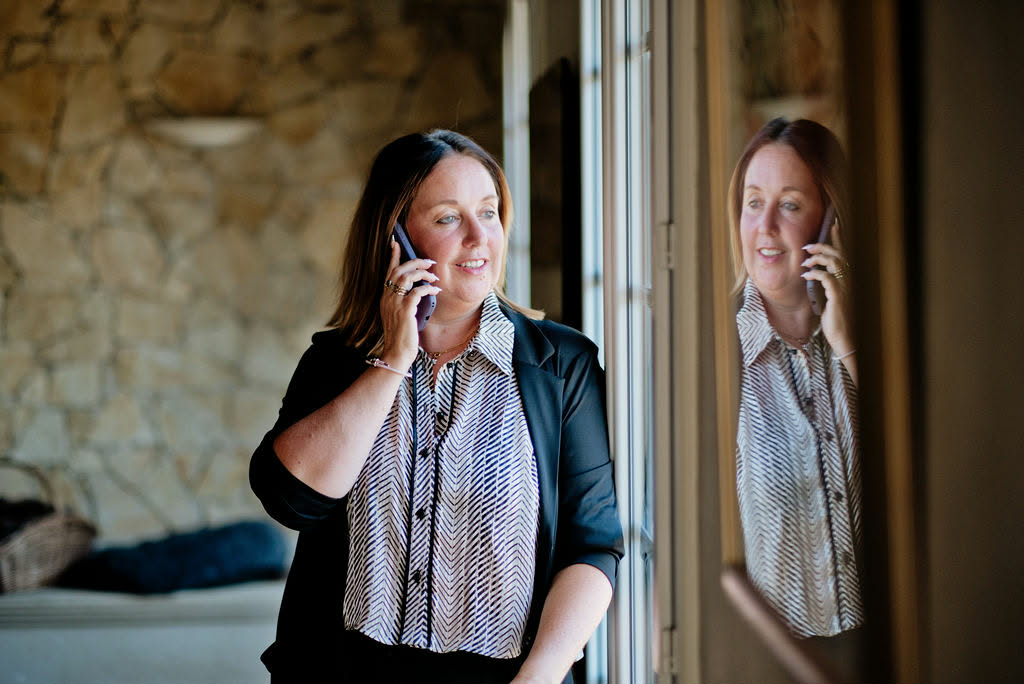
For that, we had perhaps two or three phone calls, he completed an online form and checked our paperwork before our appointment.
Looking back, it sounds ridiculous. But here’s the thing… He knew exactly what paperwork we needed.
He even knew what order it should appear in the folder.
And when you’re making a life-changing move and terrified that one missing document could derail the whole thing, that knowledge suddenly feels incredibly valuable.
Our Big Embassy Moment. We waited around two months for our visa appointment.
By the time the day arrived, we had already signed an agreement to buy our house in France.
Which, when I think about it now, was slightly insane.
Because we still didn’t actually know whether France was going to let us live here.
Phil had taken responsibility for gathering most of the paperwork because I was working, and before the appointment we went through everything again and again.
Then we travelled to London clutching our precious folder.
I had somehow imagined the whole thing taking place in an enormous, elegant building.
Perhaps a very serious French gentleman behind a vast wooden desk would interview us about our intentions.
It wasn’t quite like that.
It was more like going to the Post Office. Plastic chairs. A queue. Wait for your number.
We were called to a counter where somebody went through our carefully ordered mountain of paperwork, put it all into a folder and told us to sit down again.
A few minutes later, we were called into another room for photographs and fingerprints.
And then… “Thank you. We’ll be in touch.” That was it.
We walked back out onto the streets of London about 45 minutes later with absolutely no idea whether we were going to be allowed to move to France.
And meanwhile… we were buying a house there.
I genuinely don’t know what we would have done if the visas had been refused.
Owned a lovely French home that we could only visit for limited periods, presumably.
Thankfully, we never had to find out. When the passports eventually arrived back in the post, we opened the envelope with enormous trepidation.
And there they were. Our visas.
I think we actually jumped for joy. One enormous hurdle down. Several hundred still to go.
Buying a House the French Way. Then there was the house itself.
The French house-buying process has similarities to the UK, but there are some interesting differences.
When you decide to buy a property, you don’t simply make a casual verbal offer through the estate agent.
Your offer is put in writing and signed. The sellers sign to accept it too.
And once they’ve accepted, they can’t simply turn around and sell the property to somebody else who appears with a better offer.
No gazumping. Hurrah!
The next big stage is the compromis de vente — essentially the preliminary sales contract.
For us, this was done online with the sellers and the notaire.
A notaire handles the legal conveyancing side of French property transactions. Ours spoke English, which was rather high on our list of desirable qualities given that my French legal vocabulary was approximately… zero.
The meeting was incredibly formal.
Everyone appeared on screen, the documentation was explained and we went through exactly what we were buying.
Once we reached that stage, things suddenly felt very real.
We were buying a house. In France. And Then We Met SAFER… Ah, SAFER.
Our first proper encounter with the kind of French bureaucracy that makes you tilt your head slightly and say:
“Sorry… what?”
France takes the protection of agricultural land very seriously. In certain property transactions involving land, SAFER — the organisation involved in protecting and managing rural land — can have a right to intervene in the sale.
Our house has a large amount of land.
Not farmland.
Not fields.
A big, beautiful walled garden.
Nevertheless, the size of it meant our purchase triggered the SAFER process.
Our estate agent huffed.
The notaire puffed.
Everyone agreed it was clearly parkland attached to a house. But bureaucracy had spoken.
SAFER had to be given its opportunity. Fine.
Except we were now working to deadlines because the sale of our house in England was moving quickly.
And this is where it became wonderfully French.
There were different fees depending on how quickly you wanted SAFER to deal with the application.
You could pay the standard fee and potentially wait many weeks.
Or you could pay more for it to be looked at more quickly.
We opted for the middle ground and paid around €400 for the faster option.
Except… And this is the good bit…
Paying €400 did not mean they guaranteed they would do it within that timeframe.
No. It meant they would try.
If they were busy? Well, it might still take six, eight or ten weeks. Even though you’d paid the extra money.
Essentially, we had paid €400 in the hope that somebody might move our paperwork slightly closer to the top of a pile.
I know.
We had exactly the same reaction.
The deadline arrived. Nothing.
Our notaire chased them.
And their response was basically: “Oh yes. We’ll do that today.” And they did.
They did not, unsurprisingly, decide they wanted to buy our house and its walled garden.
We were €400 lighter. But we were through. Another hurdle crossed.
And Then Everything Went at Deborah Speed.
This is perhaps where the entrepreneur in me took over.
Our UK house sale was moving extraordinarily quickly.
We had cash buyers who were desperate to move in, no mortgage chain to contend with and a solicitor we had deliberately chosen because she had a reputation for getting things DONE.
She was brilliant. From accepting the offer to handing over our keys took approximately six weeks.
Almost unheard of. Meanwhile, we treated every request from France as though somebody had shouted FIRE.
Need a document? Here it is.
Need a signature? Done.
Need another copy of something we’ve already sent you twice?
OF COURSE YOU DO. HERE YOU GO.
We replied to everything immediately, chased what needed chasing and generally became the driving force behind getting the whole thing over the line.
And somehow, we did.
From the day we first saw our house in France to the day we actually moved into it was only around three months. Three months.
To sell our home in England, navigate the visa process, buy a house in another country and move our entire lives across the Channel.
Looking back, I’m not entirely sure whether that was impressive or completely bonkers.
Probably a little of both. The Dream Has a Practical Side.
Perhaps this hasn’t been the most romantic Letter from France I’ve ever written.
There haven’t been many glasses of wine under the stars in this one.
But I wanted to tell you this part too.
Because creating a completely different life isn’t all dreaming and vision boards.
At some point, the dream requires action.
Sometimes that action is exciting.
Sometimes it’s brave.
And sometimes it’s standing in a queue with a folder containing your birth certificate, marriage certificate, bank statements and seventeen photocopies of your passport.
But sitting here now, beside the pool, listening to the water as I write to you… I can tell you this.
The paperwork was worth it.
Every form.
Every signature.
Every frustrating email.
Even the €400 we paid for somebody to possibly look at our paperwork more quickly.
Because eventually, the bureaucracy ends.
And the life you went through all that bureaucracy to create… begins.
And there’s still plenty more to tell you.
Health insurance. House insurance. Tax. Removal companies. Moving day itself.
And then there were our first couple of weeks actually living in France… Oh my goodness.
That is a story all of its own.
So I’ll save the rest of the bureaucracy for my next letter.
And then perhaps we’ll get to the utterly chaotic adventure of what happened when we finally arrived.
Until next time, my darling.
And I hope I haven’t put you off.
À bientôt, my friends.
Deborah x
Stories, lessons, and reflections for entrepreneurs building a business that gives them more than income... it gives them freedom.